AI robot social interaction: Guide to motion planning limits
"As machines begin to inhabit our shared spaces, the lines between tool and companion blur through the lens of sophisticated programming."
How does AI define robot social interaction?
In the dim light of the laboratory, I watched the robot mimic my subtle hand gestures to create a sense of connection.
A researcher adjusts the joint parameters on a laboratory workstation to ensure a robotic arm moves smoothly. AI-driven interaction design focuses on how a machine interprets environmental cues to perform tasks without disrupting human activity.
According to KOSIS, verified official statistics such as those from KOSIS provide data on population, general society, and crime/safety.
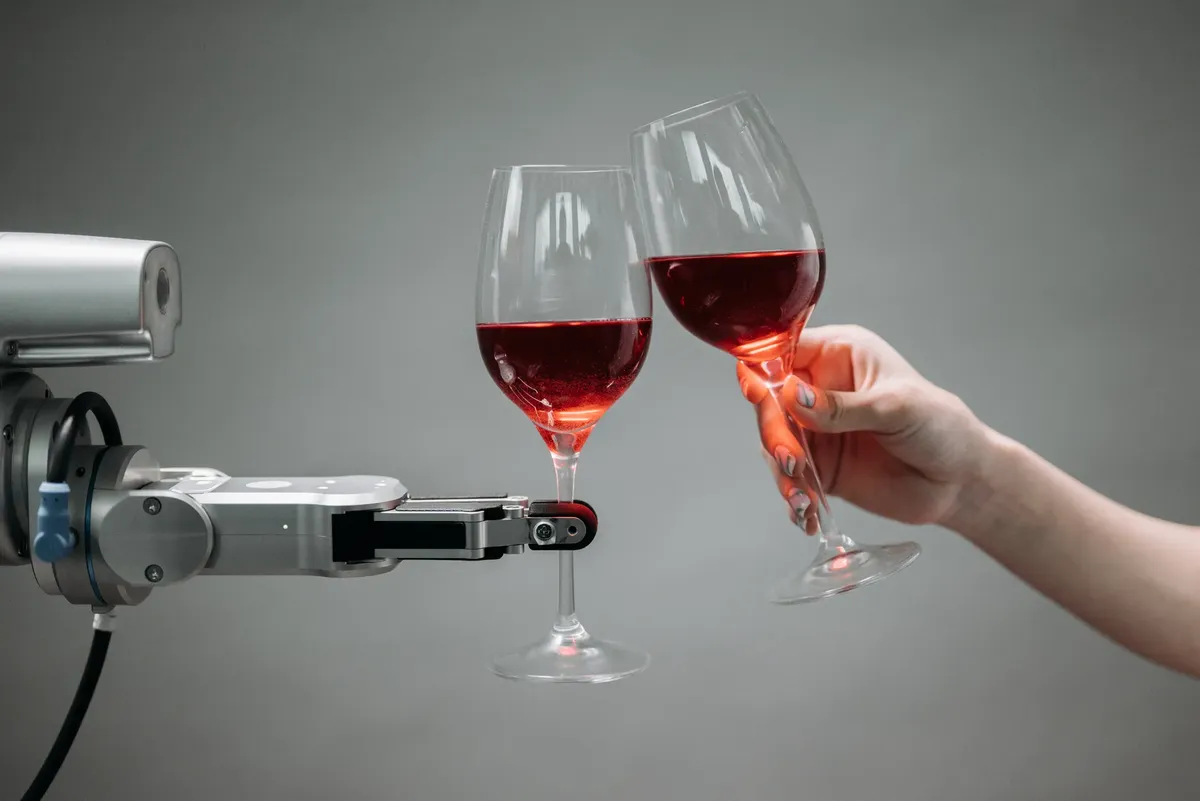
By utilizing complex algorithms, developers can program machines to react to sudden changes, though the complexity of these interactions remains tied to physical capabilities.
The International Standard of Organization defines a robot as a reprogrammable, multifunctional manipulator designed to move material, parts, tools, or specialized devices through variable programmed motions. This definition provides a baseline for how machines act within a set of tasks.
AI-driven interaction design uses these programmed motions to bridge the gap between raw mechanical movement and meaningful social presence.
The process of defining these standards involves several key developmental stages:
- Establishing basic motion planning to allow the machine to navigate through a space. 2. Programming sensory feedback loops so the robot can recognize human presence. 3. Refining social rules to ensure the machine's movements do not cause alarm.
I once watched a prototype struggle to navigate a crowded hallway, realizing that the software had to account for every unpredictable human step. AI-driven interaction design aims to solve these unpredictable variables by turning rigid movement into fluid, socially acceptable behavior.
What are the technical limits of robot movement? AI robot social interaction
A technician monitors a screen displaying the degrees of freedom as a robotic limb moves through a testing range. Understanding the relationship between movement complexity and environmental stability is a core part of AI-driven interaction design.
Currently, the ability to plan motion in dynamic settings is limited by how many ways a robot can move.
Motion planning in dynamic environments is a challenge that can at the moment only be achieved for robots with 3 to 10 degrees of freedom. This specific range allows for enough flexibility to react while maintaining stability.
While higher degrees of freedom offer more potential, they also introduce significant control challenges in unpredictable settings.
The following table compares the mobility constraints of different robotic types:
| Robot Type | Degrees of Freedom | Environmental Suitability |
|---|---|---|
| Basic Motion Models | 3 to 10 | Dynamic environments |
| Advanced Humanoids | Up to 40 | Unsuited for dynamic environments |
The technical gap between these two categories illustrates why AI-driven interaction design is so critical for safety. If a machine has too many moving parts, managing those movements in a crowded room becomes much more difficult.
How do researchers set social norms?
A group of scientists gathers in a lecture hall to present papers on human-machine communication. Establishing robot social norms AI requires rigorous academic scrutiny to ensure that new technologies meet ethical and functional standards.
Through international collaboration, researchers refine the rules that govern how robots behave in public.

One of the primary ways standards are set is through highly selective academic gatherings. For instance, the Human-Robot Interaction (HRI) conference is one of the most selective in the field, with an average acceptance rate of 26% and an average attendance of 187.
These gatherings allow experts to debate the future of robot social norms AI.
Research findings from these conferences often shape the real-world application of the technology. Around 65% of the contributions to the conference come from the US, and submissions have been cited in academic journals.
These contributions help build a global consensus on how machines should interact with people.
Why is hardware complexity a challenge for social robots?
An engineer inspects a two-armed robot that is moving with high precision but lacks fluid grace. While AI can simulate human-like movement, the physical hardware often creates a mismatch with social expectations. This tension is a central focus for those working on robot social norms AI.
Humanoid robots or even 2-armed robots, which can have up to 40 degrees of freedom, are unsuited for dynamic environments with today's technology. The sheer complexity of managing so many joints makes it difficult to maintain the stability required for social interaction.
This limitation means that current social robots often prioritize stability over human-like dexterity.
The mismatch between software capability and hardware reality can be seen in these specific constraints:
- High degrees of freedom increase the risk of unpredictable or jerky movements. 2. Increased complexity makes it harder to implement real-time collision avoidance. 3. Sophisticated hardware requires more power, often limiting operational time.
A final check of the system's stability is always required before any robot is allowed to interact with a human.
What historical examples show these trends?
A curator looks over a collection of early robotic models in a museum hall. Looking at the history of robotics helps us understand why current AI-driven interaction design is moving toward specific forms. Early models provided the building blocks for the social standards we discuss today.
Examples of robots which demonstrate this trend include Willow Garage's PR2 robot, the NASA Robonaut, and Honda ASIMO. These machines represented different approaches to the challenge of combining mobility with task execution.
They served as physical testbeds for the principles of robot social norms AI.
The evolution from these models to modern machines shows a shift in focus:
- Early robots focused on basic task completion and mechanical reliability. 2. Mid-stage models explored more human-like movements and degrees of freedom. 3. Modern research focuses on integrating these movements into human-centric environments.
I remember seeing an ASIMO unit in person and noting how much its movement was a product of both mechanical design and programmed intent.
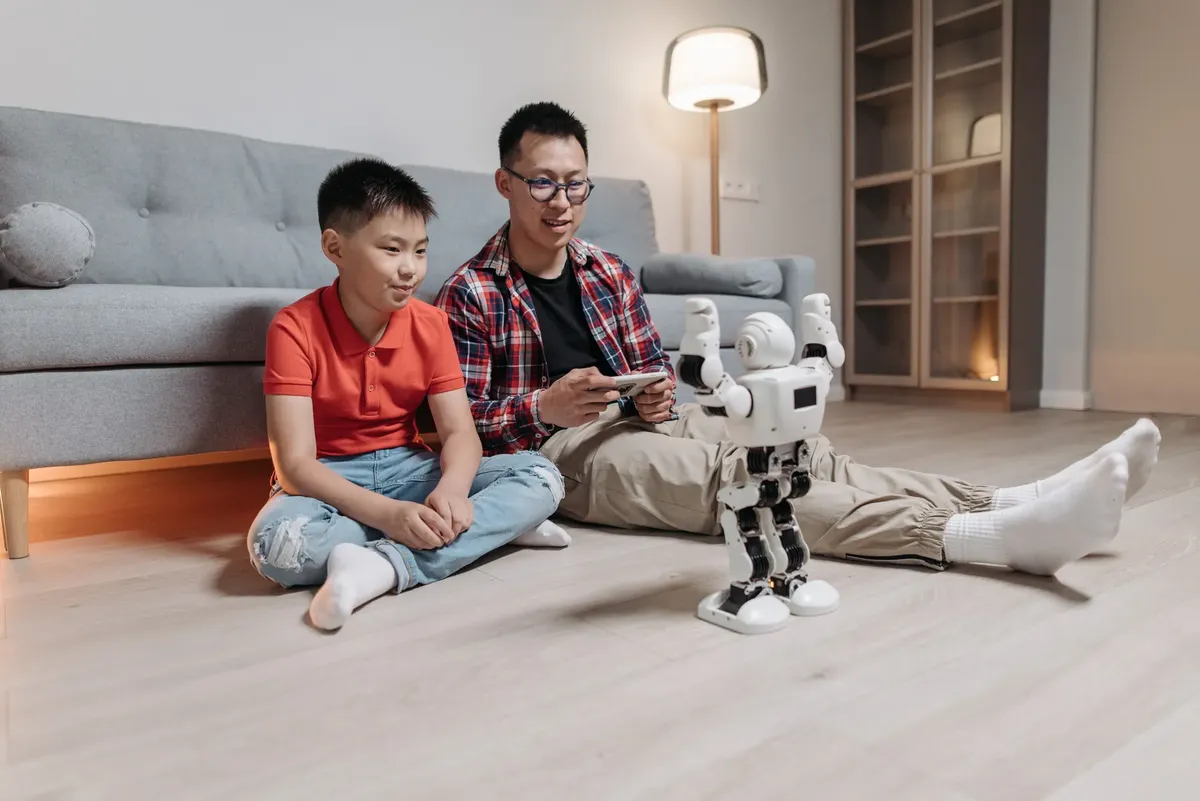
- AI technology is fundamentally reshaping how machines navigate human environments by establishing new standards for movement and social presence.
- This guide explores how programming defines behavioral boundaries, the technical limitations of current hardware, and how researchers establish interaction norms.
- You will learn about the movement constraints of various robotic models, the role of academic conferences in shaping standards, and the current limitations of humanoid mobility.
The subject here is AI robot social interaction.
The same subject is also called AI defining robot behavior.
The same subject is also called AI in robot interaction.
The same subject is also called Manufacturing AI social rules.
This part also covers AI impact on robot ethics.
This part also covers Defining robot social standards.
AI impact on robot ethics
Related
FAQ
How difficult is motion planning in active environments?
Related posts
Popular posts
AI guide to diagnostics: how robots find suspicious shadows
AI in manufacturing innovation guide for production capacity
AI in Medical Robotics: How to achieve ultra-precise surgery
Comments 0