AI integration robot standard: Why standards govern motion
"The shift toward intelligent automation is no longer just about mechanical precision; it is about how machines interact with human environments through standardized intelligence."
AI integration robot standard development relies heavily on established safety protocols to bridge the gap between mechanical motion and intelligent decision-making.
This guide explores how evolving safety standards govern collaborative robotics and how these frameworks shape modern industrial automation.
We will examine the transition from traditional motion to intelligent assistance, the specific ISO technical specifications used in industry, and the limitations of current safety-driven automation.
How do safety standards shape AI integration robot standard development?
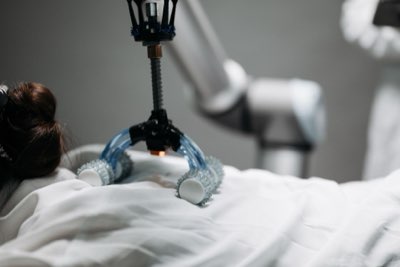
A technician adjusts a sensor on a robotic arm, ensuring the motion matches the programmed safety perimeter. The development of an AI integration robot standard is deeply rooted in the history of safety protocols that govern how machines move.
Early frameworks like the RIA BSR/T15.1, a draft safety standard for Intelligent assist devices published by the Robotic Industries Association in March 2002, set the stage for intelligent motion.
These early efforts paved the way for more complex systems where intelligence and physical movement intersect.
The evolution of these rules ensures that as machines become smarter, they remain predictable. For instance, the ANSI/RIA R15.06 was updated in 2011 to serve as a national adoption of the combined ISO 10218-1 and ISO 10218-2 safety standards.
This update reflects the industry's need to align local requirements with global technological advancements. By following these established paths, engineers can integrate more complex logic into robotic systems without compromising human safety.
What are the primary frameworks for collaborative robotics?
An engineer reviews a technical manual to ensure a new collaborative robot meets specific ISO requirements. Understanding the specific rules for collaborative robotics is essential for anyone working with AI-driven automation.
A key document in this field is ISO/TS 15066:2016, which was developed by ISO TC299 WG3. This technical specification covers collaborative robotics, including their specific requirements and integrated applications.
These documents provide the necessary guardrails for robots that work alongside humans. While traditional robots were often caged, modern AI-driven systems require more nuanced rules.
The ISO/TS 15066:2016 document serves as a vital companion to earlier standards, addressing the complexities of human-robot interaction. This ensures that as AI-driven capabilities grow, the safety requirements remain robust and applicable to real-world collaborative tasks.
How do different robot applications remain safe?
A factory supervisor monitors a screen showing both a heavy-duty industrial arm and a smaller collaborative unit. Different types of automation require distinct approaches to safety and intelligence.
It is important to note that ISO 10218-2:2011 and ISO/TS 15066 contain the safety requirements for both collaborative and non-collaborative robot applications. This distinction allows facilities to manage a diverse fleet of machines under a unified safety philosophy.
| Application Type | Relevant Safety Standard |
|---|---|
| Collaborative | ISO/TS 15066 |
| Non-collaborative | ISO 10218-2:2011 |

The ability to apply specific rules to different machine types is a cornerstone of modern manufacturing. By distinguishing between collaborative and non-collaborative roles, companies can deploy AI-driven tools where they are most effective.
I noticed during a recent site visit that even when machines were programmed for high-speed tasks, the underlying safety logic remained consistent with these global standards.
What is the lineage of modern robotic safety?
A historian looks at a collection of archived technical drawings from various decades. To understand where we are going, we must look at where these standards originated. The ISO standards currently in use are based on ANSI/RIA R15.06-1999.
This lineage shows a continuous effort to refine how machines are controlled and how they interact with their surroundings.
The progression from early drafts to comprehensive ISO specifications demonstrates a maturing field. As AI-driven capabilities increase, the industry relies on this historical foundation to build new, more complex systems.
The transition from simple motion to intelligent assistance was built on these specific, iterative improvements to safety logic.
How do we implement these standards in a facility?
A project manager walks through a production line, checking each station against a compliance checklist. Implementing these standards requires a structured approach to ensure all machines are integrated safely.
- Identify the specific application type, such as collaborative or non-collaborative, to determine which ISO requirements apply. 2. Review the technical specifications, such as ISO/TS 15066:2016, to ensure all integrated applications meet the necessary requirements. 3. Verify that all localized standards, like the 2011 update to ANSI/RIA R15.06, are aligned with the machine's operational logic.
A final check involves auditing the interaction between human workers and the automated systems to ensure no safety gaps exist. This systematic process ensures that the AI integration robot standard is maintained across the entire facility.
What are the limitations of current automation standards?
A technician pauses a machine to inspect a sensor that has triggered a safety stop. While these standards are comprehensive, they are limited to the specific parameters defined within their technical scope.
For example, ISO/TS 15066:2016 is designed to cover collaborative robotics and their integrated applications, but it does not govern all possible robotic behaviors.
The effectiveness of these standards depends on the specific conditions of the application. If a machine is used outside the scope defined by ISO 10218-2:2011 or ISO/TS 15066, the safety requirements may not be sufficient.
Therefore, understanding the specific boundaries of each standard is critical for safe deployment.
- How do safety standards shape AI integration robot standard development?
- What are the primary frameworks for collaborative robotics?
- How do different robot applications remain safe?
The same subject is also called AI in robotics trends.
The same subject is also called New robot benchmarks.
The same subject is also called Smart factory robots.
The same subject is also called Robotics tech evolution.
This part also covers AI impact on manufacturing.
This part also covers Real world robot use cases.
This part also covers Safe automation in tight spaces.
AI impact on manufacturing
Related


Comments 0