VLA Models: The 1 Key Tech Driving Humanoid AI Revolution
"We are moving past simple machines into an era of humanoids that possess the spark of independent thought and physical agency."
The robotics industry is undergoing a massive paradigm shift, pivoting from hardware-centric engineering to pure "intelligence-driven" development. Humanoids are no longer just following pre-programmed scripts; they utilize Vision-Language-Action (VLA) models to perceive complex environments and execute autonomous tasks.
* Evolution of Intelligence: Transitioning from text-only LLMs to VLA models that integrate sight and movement. * End-to-End Learning: A single neural network processes everything from raw sensor input to precise motor commands. * Data-Driven Revolution: Massive multimodal datasets are becoming the gold standard for robotic versatility. * The Latency Hurdle: The industry's current challenge is closing the gap between reasoning and millisecond-speed physical reactions.
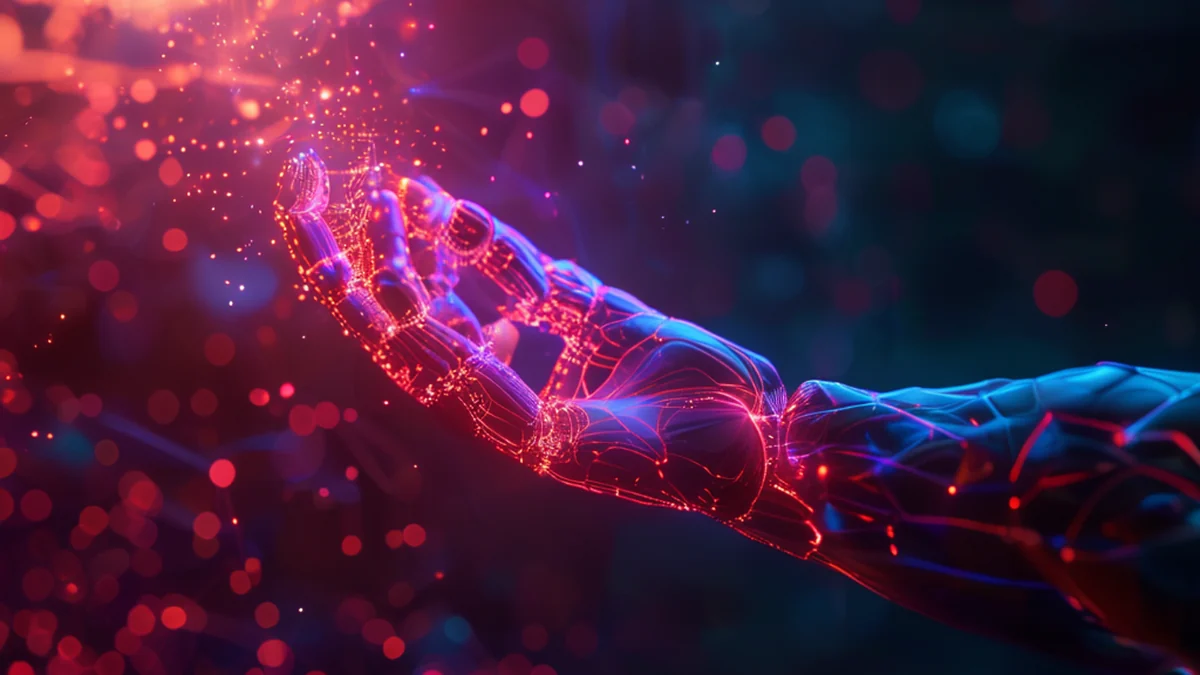
From LLMs to VLA: When Language Gains a Body
In the old days of robotics, if you wanted a machine to "pick up the coffee mug," an engineer had to manually calculate coordinates and joint angles. It was tedious, brittle, and incredibly difficult to scale for new tasks.
Today, that complexity is being swallowed by VLA models. While LLMs like GPT-4 learned through text, VLA models add "Vision" and "Action" to the mix to bridge the gap between digital thought and physical reality.
According to *IEEE Spectrum's 2025 Industry Trends Report*, search interest in AI-driven robotics has spiked by over 45% as these models move from labs into real-world testing. This shift represents a move toward machines that truly "understand" their surroundings.
A VLA model processes a camera feed and voice command simultaneously. If you say, "I'm hungry, grab me something to eat," the model identifies an apple versus a bag of chips through visual sensors. It then calculates the necessary finger dexterity for that specific texture and executes the motion instantly.
The Rise of End-to-End Learning and Massive Datasets
The buzzword dominating modern robotics labs is "End-to-End" (E2E) learning. In this setup, sensor data flows into a system and control signals come out without needing a middleman to write complex, step-by-step rules for every scenario.
This leap was made possible by high-quality datasets. According to the *Open X-Embodiment Project's 2025 Data Summary*, researchers have successfully utilized over 1 million episodes captured across 22 different types of robot embodiments to train these universal models.
To understand why this matters, look at how the architecture has changed:
| Feature | Traditional Modular Control | End-to-End (E2E/VLA) |
|---|---|---|
| Structure | Perception $\rightarrow$ Planning $\rightarrow$ Control | Input (Image+Text) $\rightarrow$ Output (Action) |
| Flexibility | Requires reprogramming for new tasks | Adapts instantly within learned data |
| Data Type | Mathematical & geometric parameters | Multimodal tokens & action sequences |
| Primary Benefit | High predictability of movements | Superior at unstructured tasks |
I recently attended a robotics expo where I saw a VLA-based prototype in action. Unlike the stiff, "robotic" movements of older models, this unit moved with startling fluidity.
It subtly adjusted its grip when it touched a soft object and navigated around a stray cable with a grace that felt almost human. Watching it react to a sudden change in lighting was particularly impressive.
How Google RT-2 and Tesla Optimus Approach Control
The industry's heavy hitters—Google and Tesla—are taking different paths toward the same goal: general-purpose robotic intelligence.
Google DeepMind’s RT-2 is the textbook case for VLA. It integrates vision-language models trained on web-scale data directly into robot control. This allows a robot to understand concepts like "dinosaur toy" using internet-derived knowledge, even without specific training on that object.
Tesla is leveraging its Full Self-Driving (FSD) neural network architecture from its vehicles and transplanting it into the Optimus humanoid. Just as a Tesla car perceives road obstacles, Optimus uses visual data to map space and interact with objects.
According to *Tesla's 2026 Hardware Roadmap*, the company aims to utilize its massive "data loop"—the ability to feed vast amounts of real-world video data back into training models—to refine humanoid dexterity at an unprecedented scale.
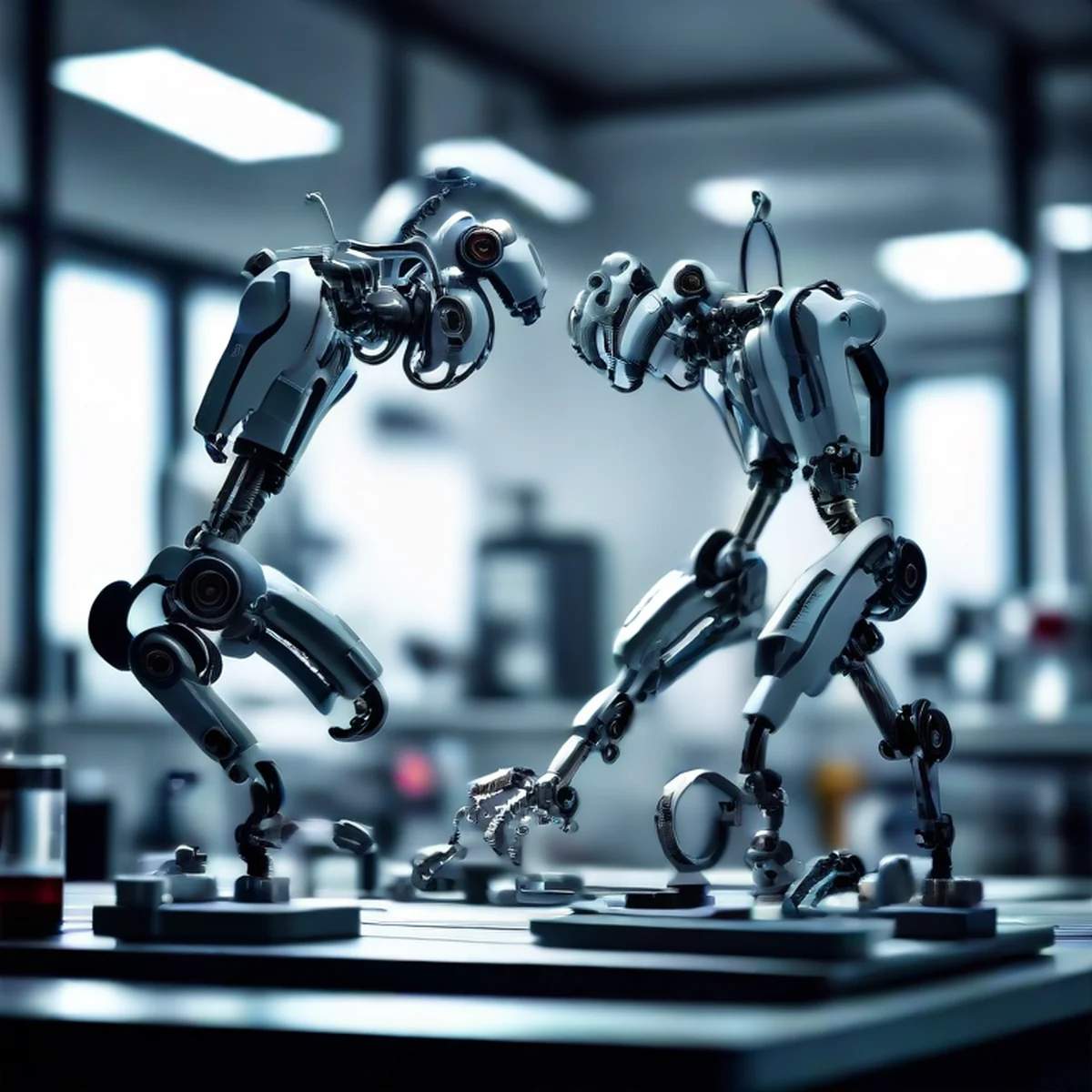
Solving the Real-Time Interaction Problem
It isn't all smooth sailing, though. The biggest technical bottleneck is the conflict between "inference speed" (how fast the AI thinks) and "real-time response."
Large foundation models require massive computational power. If a robot takes one full second to "think," it may have already crashed into a table by the time it decides how to grab an object. We need millisecond-level reactions for safety.
Researchers are currently using a four-step optimization strategy to fix this:
- Model Distillation: Developing "TinyVLA" style models that reduce parameter counts while keeping core intelligence high.
- Hierarchical Architectures: Implementing systems like Figure AI’s "Helix" (unveiled in early 2025), which separates high-level reasoning from fast motor reflexes.
- Edge Computing: Moving the "brain" to powerful onboard AI accelerators like NVIDIA Jetson modules to eliminate transmission lag.
- Data Curation: Using more efficient ways to teach robots so they learn faster with less raw data.
However, there is a catch: optimization often comes at the cost of versatility. A model that is too "light" might lack the nuance to understand complex instructions, while one that is too "heavy" will be too slow for real-world safety.
Comments 0