How has the global market for industrial robots grown?
"The global market value of industrial robot installations reached an all-time high of US$ 16.7 billion in 2026."
The global industrial robotics landscape is expanding rapidly, with market values hitting record heights in 2026. This growth is driven by diverse sectors including automotive and electronics, while advancements in artificial intelligence promise to redefine humanoid capabilities.

Key takeaways: * The global market value for industrial robot installations reached US$ 16.7 billion in 2026. * By the end of 2024, there were approximately 4,663,698 operational industrial robots worldwide.
* The automotive industry remains the largest customer for industrial robots, holding a 30% market share.
How has the global market for industrial robots grown?
A technician adjusts a robotic arm in a sterile factory setting, checking the calibration of a new unit. The scale of automation is evident in the massive investment seen across the globe.
This surge reflects a massive shift toward automated production lines across various continents.
The scale of deployment is equally significant. According to the International Federation of Robotics (IFR) study World Robotics 2025, there were about 4,663,698 operational industrial robots by the end of 2024.
This volume of machines indicates a deep integration of robotics into the global supply chain.
Which industries are driving the robot market? HL Robotics parking robot
An engineer monitors a dashboard in an automotive assembly plant, watching as robotic arms move in perfect synchronization. The data on the screen shows the heavy concentration of technology in specific sectors.
The distribution of technology usage shows that the automotive industry is the primary driver, accounting for a 30% market share. Following this, the electrical/electronics industry holds a 25% share, representing the next largest group of users.
Other sectors contribute to the total market volume. The metal and machinery industry holds a 10% share, while the rubber and plastics industry and the food industry each account for 5%. These diverse applications highlight how versatile modern automation has become.
What are the latest advancements in AI and robotics?
A researcher observes the fluid, lifelike movements of a humanoid robot during a laboratory demonstration. The machine moves with a level of precision that mimics biological motion.
Recent breakthroughs focus on the intersection of artificial intelligence and physical movement.

Boston Dynamics and Toyota Research Institute (TRI) announced a step forward in robotics and artificial intelligence research by demonstrating a Large Behavior Model (LBM) powering the Atlas humanoid robot.
This technology aims to move toward general-purpose humanoids. By utilizing advanced models, robots can potentially navigate more complex environments and perform tasks that require human-like coordination.
How do robots achieve precise movement?
A mechanical engineer inspects a multi-axis manipulator, ensuring each joint moves within its designated range. The complexity of the hardware is designed to allow for highly specific tasks.
Precision in robotics often involves managing multiple directions of movement. A full parallel manipulator can move an object with up to 6 degrees of freedom (DoF), which is determined by 3 translation 3T and 3 rotation 3R coordinates for full 3T3R mobility.
This level of freedom allows for intricate tasks in manufacturing. Controlling these coordinates ensures that the robot can position objects with extreme accuracy in three-dimensional space.
What are the regional trends in production?
A factory manager walks through a massive production facility, watching hundreds of machines operate simultaneously. The sheer volume of output is a testament to regional manufacturing strengths.
Production capacity varies significantly by region. As of 2024, China accounted for 43% of the production of industrial robots in the world. This concentration highlights the importance of specific geographic hubs in the global robotics supply chain.
The concentration of production can lead to shifts in global trade and technology availability. As more robots are manufactured, the reliance on these production hubs becomes a key factor in global industrial strategy.
How is safety managed in robotic environments?
An inspector wears protective gear while walking through a fenced-off robotic work cell. The safety protocols are strictly enforced to prevent accidents between humans and machines.
Safety remains a critical concern as automation increases. The Occupational Safety and Health Administration (OSHA) has investigated dozens of robot-related deaths and injuries, which can be reviewed at the OSHA Accident Search page.
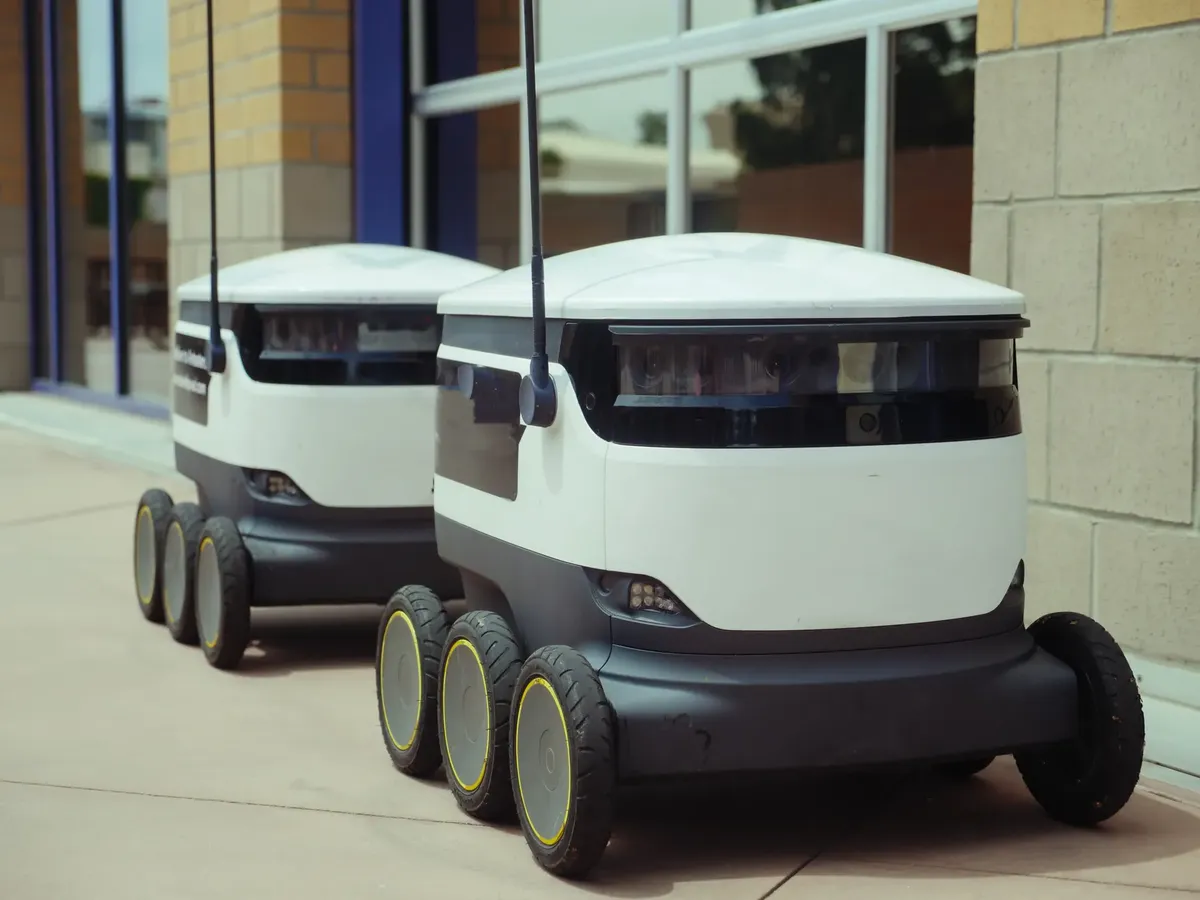
Ensuring human safety requires constant vigilance and updated protocols. While automation improves efficiency, managing the physical interaction between humans and high-speed machinery remains a primary challenge for industrial operators.
The subject here is HL Robotics parking robot.
The same subject is also called Samsung partnership robot.
The same subject is also called Lexus Toyota robot test.
The same subject is also called HL Robotics quality high.
The same subject is also called Automotive robot innovation.
This part also covers HL Robotics product development.
Related
- How Samsung Rainbow Robotics North America Meets Safety
- Hyundai Atlas robot business how to shape future industry
What are the implications of regional production trends on the global market? 1. The concentration of production in certain areas means that the global market's stability is tied to those geographic hubs. 2. Reliance on specific manufacturing centers affects the availability of robots worldwide. 3. Shifts in these production patterns can influence international trade agreements concerning robotics.
When considering the global market, the manufacturing output from China represents a substantial portion of the worldwide supply. This dominance in production capacity dictates a significant factor in the overall global market dynamics.
The varying production capacities across different regions introduce a condition where supply chain resilience becomes a major consideration for industries adopting these technologies. This regional disparity impacts how quickly the global market can meet demand.
How does the integration of robotics affect industrial operations? 1. The deep integration of robotics into the global supply chain signifies a fundamental change in how goods are produced. 2. The high volume of operational robots indicates widespread adoption across various industrial processes. 3. The diverse applications of automation demonstrate the versatility of modern robotic systems in the global market.
Automotive plants, as the largest customer, exemplify this deep integration by relying heavily on robotic systems for assembly. The adoption across electronics and other sectors shows the breadth of this integration.
The comparison between the market share of the automotive sector and other industries illustrates the varied impact of robotics on different parts of the global market. The integration allows for the high precision required in complex manufacturing tasks.
FAQ
How many industrial robots were operational in 2024?
Related posts



Popular posts

AI guide to diagnostics: how robots find suspicious shadows

AI in manufacturing innovation guide for production capacity

AI in Medical Robotics: How to achieve ultra-precise surgery
Comments 0