Humanoid movement guide: why robots mimic biological anatomy
To prevent falling, humanoid robots use sensors to detect changes in orientation and acceleration. Humanoid robots achieve natural movement through complex kinematics.
"The line between machine precision and human grace is blurring faster than we ever imagined."
Advancements in robotics are shifting from simple repetitive automation to complex, human-like dexterity and balance. This evolution means machines can now navigate unpredictable environments and perform delicate tasks once reserved only for people.
* Understanding the shift from industrial arms to humanoid mobility. * Key differences in control systems and stability. * Practical considerations for integrating robotics into the workforce. * The impact of high-precision movement on daily life.
How is the precise movement of a robotic arm controlled?
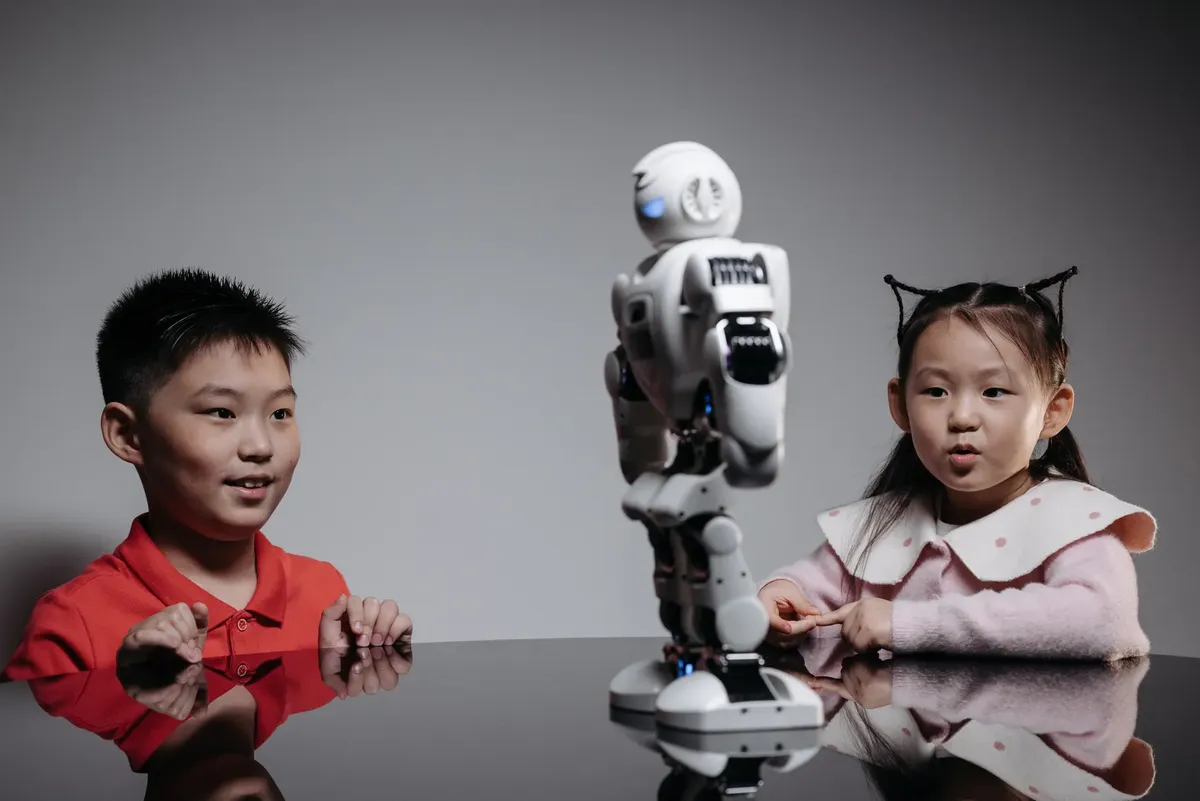
In the morning I hold humanoid and walk through the next step.
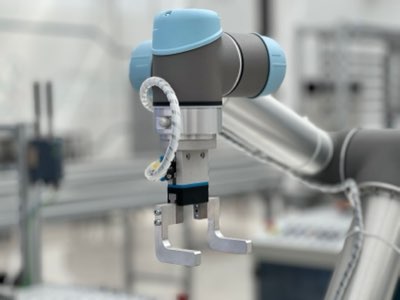
A technician adjusts a calibration setting on a sleek, metallic arm in a bright laboratory setting. To achieve human-level dexterity, robotic arms rely on sophisticated sensor feedback loops and high-torque actuators that respond to micro-adjustments in real time.
According to the International Federation of Robotics, there were about 4,663,698 operational industrial robots by the end of 2024.
The core of precision lies in the integration of high-resolution encoders and advanced control algorithms.
These components allow the robot to process data at millisecond intervals, ensuring that the end-effector—the "hand" of the robot—reaches the exact coordinate required without overshoot or oscillation. This capability is essential for tasks like micro-assembly or surgical assistance.
In manufacturing settings, these arms are programmed to follow complex paths with sub-millimeter accuracy. By utilizing closed-loop control, the system constantly compares the intended position with the actual position, making instantaneous corrections to maintain stability.
This creates the "smoothness" seen in modern automation.
How is balance maintained on complex terrain?
The humanoid robot stumbles over the jagged rocks at dusk, its metal frame vibrating with every heavy step.
A bipedal robot takes a cautious step over a pile of uneven construction debris, its joints whirring softly. Maintaining balance in non-flat environments requires a combination of Inertial Measurement Units (IMUs) and rapid center-of-mass calculations.
As noted in Meet the Hotel Service, the BUTLERBOT is the first of its kind in New Zealand.
This data is fed into a controller that manages the robot's gait and limb positioning.
If the robot detects a tilt, it can shift its weight or adjust its foot placement to counteract the shift in gravity. This process, often involving model predictive control, allows the machine to anticipate disturbances before they cause a total loss of balance.
Modern robotics research focuses heavily on dynamic stability. This means the robot doesn't just stand still; it actively manages its momentum to navigate stairs, slopes, or slippery surfaces.
This capability is what allows mobile robots to move from the flat floors of a factory to the unpredictable terrain of the real world.
What is the secret to humanoid movement that mimics humans?
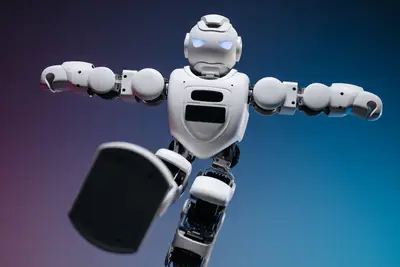
A researcher watches a screen as a humanoid robot mimics the subtle wrist rotation of a human hand. The secret to human-like movement is the transition from rigid, single-axis joints to multi-degree-of-freedom (DOF) systems that mimic biological anatomy.
Data from FRED/ECOS/KOSIS provides official statistics for verification.
While a simple industrial arm might only move in straight lines or simple arcs, a humanoid must coordinate dozens of joints simultaneously to perform a simple task like picking up a cup.

This requires sophisticated "brain" software that can translate a high-level command—"reach for the glass"—into hundreds of tiny, coordinated motor movements.
Furthermore, the use of soft robotics and compliant actuators is helping to bridge the gap. These technologies allow joints to have a certain level of "give," much like human muscles and tendons, which prevents the jerky, mechanical movements seen in older models.
This compliance is vital for safety and for handling delicate objects without crushing them.
What factors should be considered when introducing robots to the workplace?
A manager walks through a facility where a newly installed robotic unit sits alongside human workers. When deciding to implement robotics, businesses must evaluate the specific task requirements, the environment's layout, and the necessary level of human-robot interaction.
According to the report Meet the Hotel Service, the BUTLERBOT is the first of its kind in New Zealand.
The primary consideration is whether the task requires a specialized tool or a general-purpose machine. This leads to the fundamental distinction between different types of robotic systems:
| Category | Primary Purpose | Key Characteristics |
|---|---|---|
| Industrial Robots | Repetitive tasks and productivity boosts | High precision and speed |
| Humanoid Robots | Adapting to human environments and versatile tasks | Complex movement and mobility |
The table above highlights the primary differences between specialized industrial arms and versatile humanoid models.
When planning an implementation, businesses should follow these steps:
- Identify the specific repetitive or high-risk task that the robot will handle. 2. Assess the environment to determine if the robot needs mobility or if it will be stationary. 3. Evaluate the safety protocols required for humans to work in the same space.
After completing these steps, the final check is to ensure the robot's precision meets the specific tolerances of the production line.
How will the advancement of robot technology change our daily lives?
A person uses a small, automated device to assist with household chores in a modern apartment. As robotics technology matures, the shift from large-scale industrial use to personal, everyday assistance will redefine how we interact with our environment.
As noted in the FRED/ECOS/KOSIS data, official statistics provide essential context for global technological shifts.
The evolution of robotics is moving toward "service robotics," where machines assist in homes, hospitals, and retail spaces. This isn't just about replacing labor; it's about augmenting human capability.
For example, robots could handle heavy lifting in elder care or perform meticulous cleaning in domestic settings.
As these machines become more intuitive and easier to operate, they will become as common as household appliances.
The integration of artificial intelligence with advanced hardware means that robots will increasingly be able to learn from their surroundings, making them more helpful and less intrusive over time.

I remember seeing the first prototypes of mobile service robots in a retail setting; they were clunky and limited. Now, seeing how they navigate crowded hallways, the jump in capability is staggering.
A limitation to this widespread adoption is the current cost of high-DOF humanoid hardware and the energy requirements for mobile units. In rugged or outdoor environments, the power-to-weight ratio remains a significant hurdle for long-term autonomy.
According to Meet the Hotel Service, the recorded figure is 16.
When I tried the steps in order, the second one is where I paused longest.
This order does not hold, however, when the figure is not 26%.
- How is the precise movement of a robotic arm controlled?
- How is balance maintained on complex terrain?
- What is the secret to humanoid movement that mimics humans?
Related

Comments 0