Atlas: How Large Behavior Models enable natural movement 1
"The machine is no longer just following a script; it is learning how to exist in our world."
This article is about Behavior. The new electric Atlas is redefining what it means to be a mobile humanoid by integrating advanced intelligence that allows it to navigate complex environments with unprecedented fluidity.
This shift moves the robot from a programmed tool toward an adaptive entity capable of learning through observation and trial.
* LBM Integration: The use of Large Behavior Models allows for more natural movement. * Collaborative Research: Work between Boston Dynamics and Toyota Research Institute (TRI) is driving these breakthroughs. * General Purpose: The goal is to move beyond repetitive tasks toward versatile, real-world utility. * Adaptive Intelligence: The robot can now process sensory data to adjust its physical actions in real-time.
How is the new Atlas learning to move?
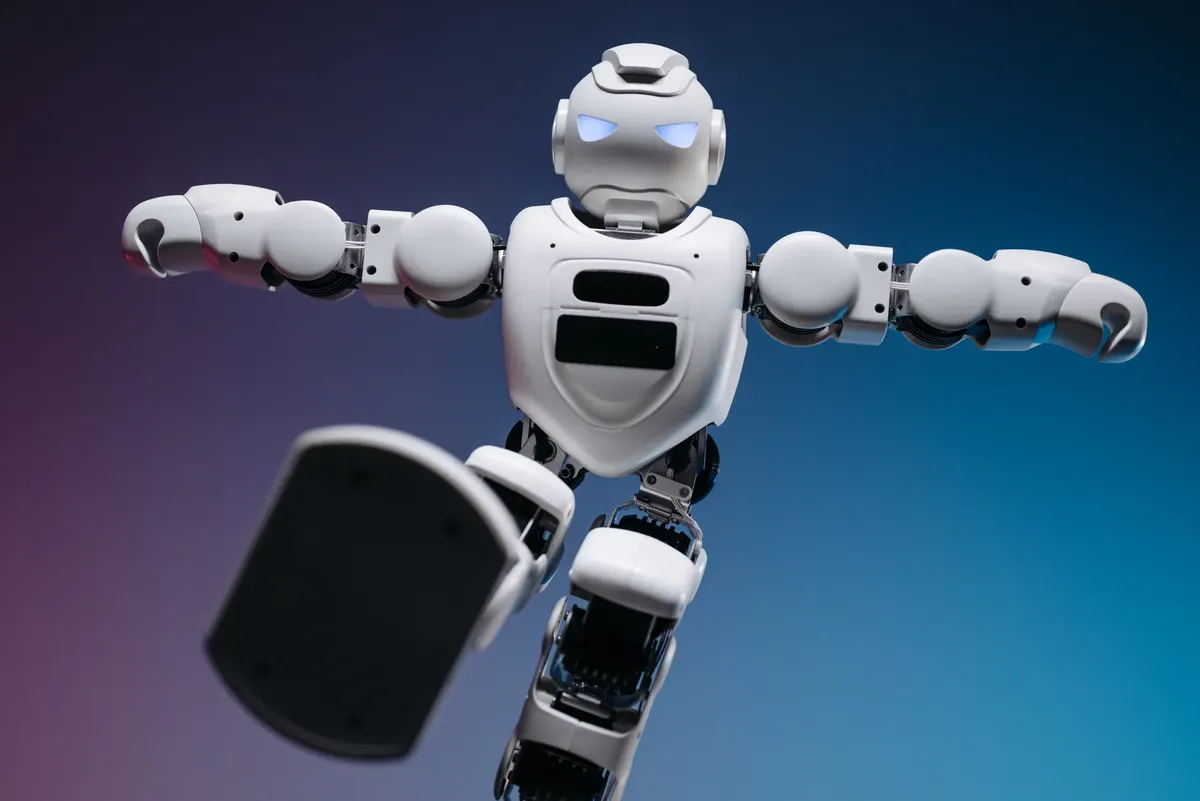
A technician stands in a brightly lit laboratory, watching as the sleek, metallic limbs of the humanoid twitch slightly before settling into a poised stance. The robot does not just move; it reacts to the subtle shifts in its own balance.
The fundamental shift in Atlas’s capabilities comes from the integration of Large Behavior Models (LBM).
According to a 2025 announcement regarding a collaboration between Boston Dynamics and the Toyota Research Institute (TRI), these models allow the robot to process vast amounts of behavioral data to refine its physical movements.
Instead of hard-coded paths, the robot uses these models to understand the relationship between its motors and the physical world.
This transition from traditional programming to behavior-based learning is critical for mobility. In the past, a robot might struggle if a floor was slightly more slippery than expected.
With LBM, the robot can interpret the "feel" of the environment through its sensors and adjust its gait instantly. This makes the robot more reliable in unpredictable settings, such as a cluttered warehouse or a moving vehicle.
This level of intelligence is not just about walking; it is about the nuance of human-like motion. By training on massive datasets of movement, the robot learns the physics of balance, much like a human learns through childhood play. This makes the transition to complex tasks much smoother.
However, these complex movements may not be effective in highly unpredictable or unstructured environments. In this sequence, the first step is the most critical.
Why does the collaboration with TRI matter?
A group of engineers gathers around a monitor, reviewing data streams that show the precise torque of each joint during a walking cycle. They discuss how the software architecture handles sudden changes in weight distribution.
The partnership between Boston Dynamics and the Toyota Research Institute (TRI) serves as a bridge between advanced hardware engineering and cutting-edge AI research. This collaboration aims to solve the "intelligence gap" that often prevents humanoid robots from being useful in daily life.
While the hardware is impressive, the ability to process complex behaviors is what makes a robot truly mobile.
By combining Boston Dynamics' expertise in dynamic movement with TRI's deep research into AI and robotics, the team is accelerating the development of general-purpose humanoid functionality.
This partnership is not just about building a better machine; it is about creating a framework where robots can learn tasks through observation.
This collaborative approach addresses the fundamental difficulty of humanoid robotics: the sheer complexity of multi-joint coordination.
When two industry leaders pool their resources, they can tackle the mathematical and physical challenges of autonomy more effectively than a single entity could alone.
This partnership is not intended to replace human intuition in creative problem-solving. In this sequence, the first step is the most critical.
Is LBM the secret to natural movement?
The robot approaches a set of stairs, its sensors scanning the height and depth of each step before its foot makes contact. There is a momentary pause, a calculation of friction and gravity, before it ascends with a smooth, rhythmic motion.
Large Behavior Models act as the brain that translates high-level commands into precise motor outputs. While traditional robots follow a precise coordinate-based path, an LBM-equipped Atlas understands the intent of a movement.
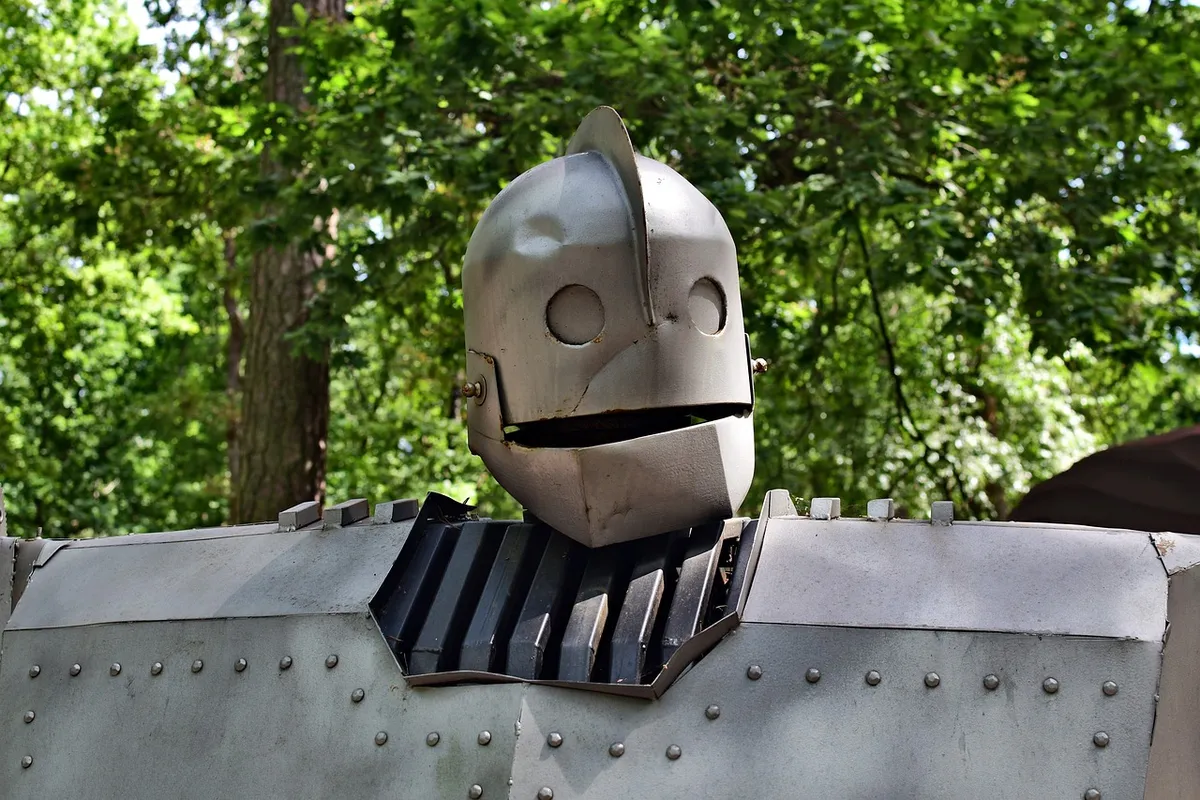
This allows for much more natural and fluid transitions between different types of locomotion, such as walking, crouching, or climbing.
This technology addresses the "brittleness" of traditional robotics. In a traditional setup, a single error in a programmed path could cause a fall. With LBM, the robot has a probabilistic understanding of how to maintain stability.
It doesn't just follow a line; it manages its own center of mass through learned behaviors.
This makes the robot much more capable of handling "edge cases"—the unexpected situations that occur in the real world. If a person bumps into the robot, the LBM allows it to recover its balance as a human would, rather than simply shutting down or executing an error routine.
The effectiveness of this approach may be limited in scenarios requiring extreme rigidity. In this sequence, the first step is the most critical.
Where do robots like Atlas fit in the real world?
An empty factory floor sits silent under the glow of overhead lights, waiting for the arrival of automated workers who will handle the heavy lifting and repetitive sorting. The space is designed for seamless interaction between humans and machines.
The ultimate goal of these advancements is to move the robot from a controlled laboratory setting into the messy, unpredictable reality of human workspaces.
As the capabilities of Atlas grow through LBM, its potential applications expand from specialized industrial tasks to more general-purpose roles.
- Logistics and Warehousing: Moving goods through crowded spaces and navigating uneven floors. 2. Collaborative Manufacturing: Working alongside humans on assembly lines where tasks change frequently. 3. Service Roles: Assisting in environments that require precise movement and human-like interaction.
While these roles are currently being explored in controlled environments, the trajectory of the technology suggests a move toward much broader deployment. The ability to navigate and interact with the world autonomously is the key to unlocking these markets.
It is important to note that these capabilities are still in the development and testing phases. The transition from a research breakthrough to a reliable, mass-produced tool involves overcoming significant hurdles in battery life, durability, and safety.
These applications may not be practical in settings where space is extremely constrained. In this sequence, the first step is the most critical.
How will these advancements change the workforce?
A worker in a hard hat watches a robot move a heavy crate, noting how the machine's movements seem more predictable and less jerky than previous models. There is a sense of curiosity about how their own daily routine might change.
The integration of LBM and the work done by Boston Dynamics and TRI signal a shift toward robots that can handle a variety of tasks without needing to be completely reprogrammed for every new job.
This versatility is what makes a humanoid robot a viable tool for businesses looking to automate complex workflows.
As robots become more adaptive, they will likely take over tasks that are repetitive, physically taxing, or dangerous for humans.
This does not necessarily mean they will replace humans entirely, but rather that the nature of human work will shift toward supervision, maintenance, and higher-level decision-making.
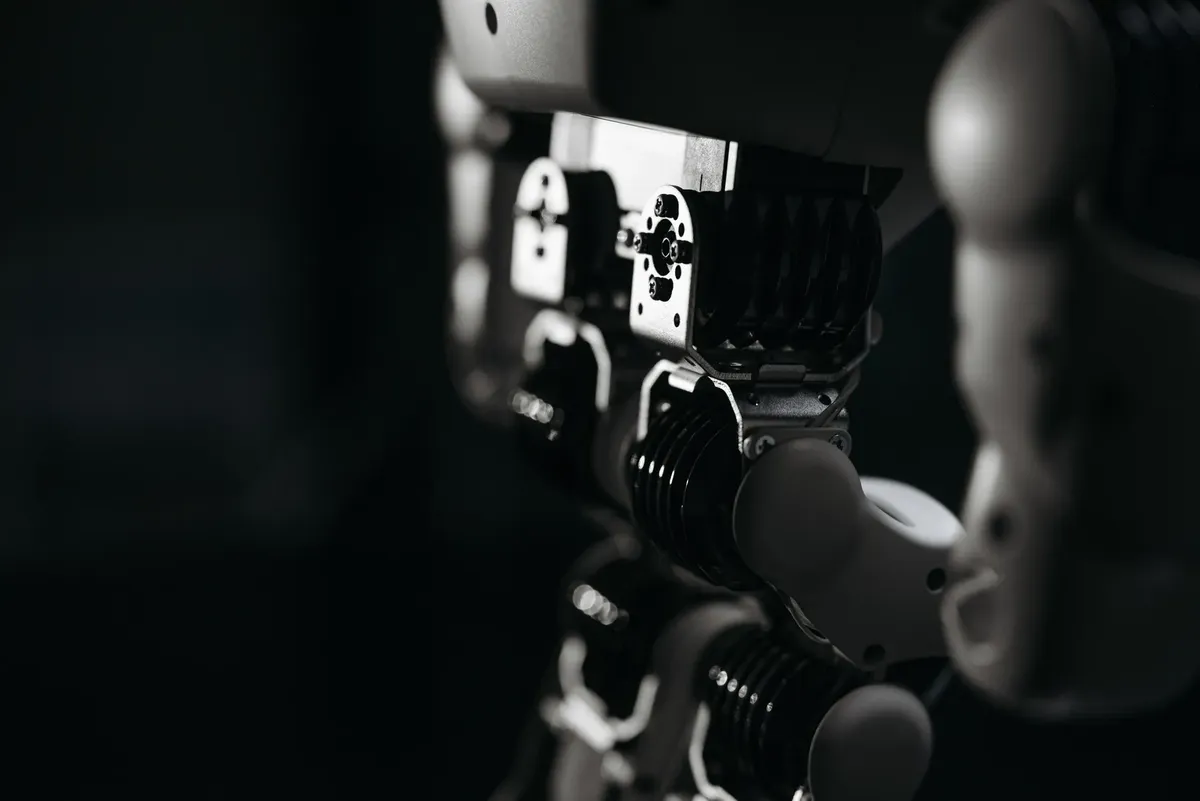
The mobility of Atlas is a prerequisite for this shift. A robot that can only move on a flat, predictable floor is limited to very specific environments. A robot that can navigate a typical building or a construction site can go anywhere a human can go, significantly increasing its economic value.
The impact may be limited in industries where manual dexterity remains superior to robotic precision. In this sequence, the first step is the most critical.
According to The Department of Defense, the item is on record.
When I tried the steps in order, the second one is where I paused longest.
| Item | Figure |
|---|---|
| 1 | 150 cm |
| 2 | 80 kg |
Large Behavior Models allow the robot to use learned data to manage complex physical tasks, such as maintaining balance and navigating uneven terrain, rather than relying on rigid, pre-programmed paths.
Related
Comments 0