Humanoid robots travel from factory to our homes.
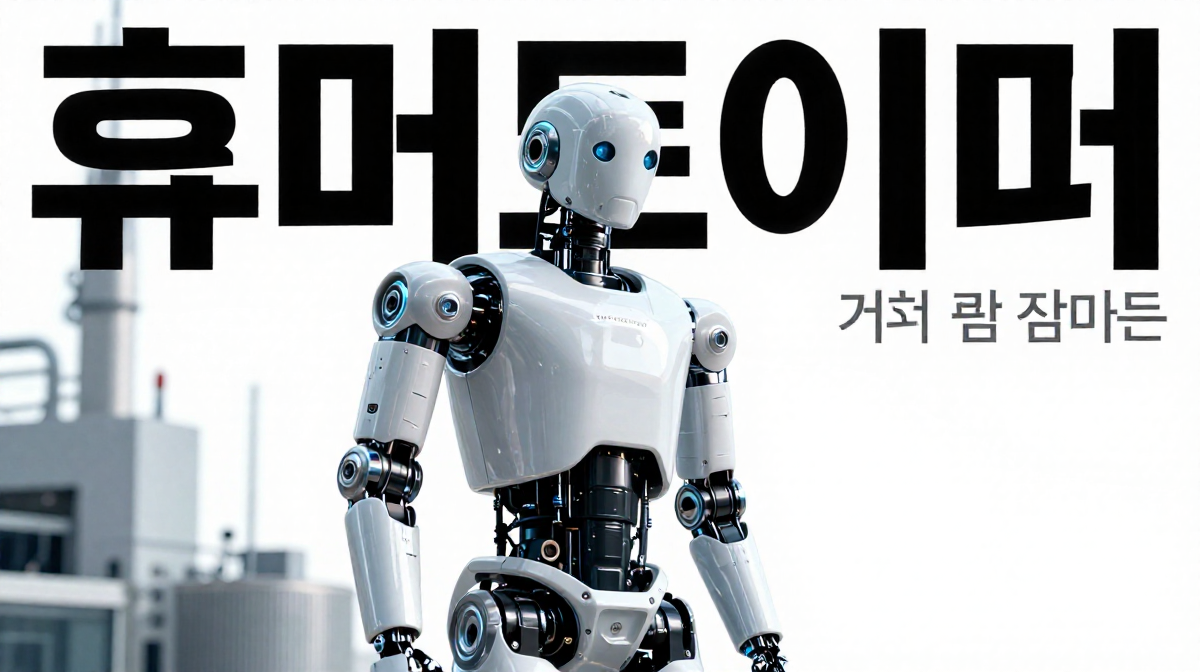
What once seemed like a story from science fiction—robots that look and act like humans—is now stepping out of labs and into real life. Humanoid robots are beginning to be deployed in actual industrial settings. What made this transformation possible?
AI Has Woken the Robot’s 'Brain'
In the past, robots were simply machines that precisely repeated pre-set motions. But with artificial intelligence advancing dramatically, robots’ abilities to perceive and make decisions have improved significantly.
Today’s robots can "see" their surroundings, "understand" situations, and autonomously "decide" on the next action—approaching true autonomy.
While their hands and legs (hardware) were already highly refined, it was only when a smart brain—powered by AI—was added that their practical value truly exploded.
Why Humanoid Form?
Many ask: "Why must they look like humans?" The answer is simple: our world was built for people. Stairs, door handles, tools, and workbenches are all designed to fit human bodies.
Therefore, humanoid robots can seamlessly integrate into existing environments without requiring any changes to infrastructure.
Instead of installing entirely new equipment, these robots can simply take over the same positions once occupied by humans—offering a major advantage.
According to UNESCO's 2024 report, the rapid integration of AI into robotics is reshaping global labor markets. Experts predict that by 2026, specialized humanoid models could automate up to 15% of repetitive manual tasks in manufacturing hubs.
What’s Different from the Past?
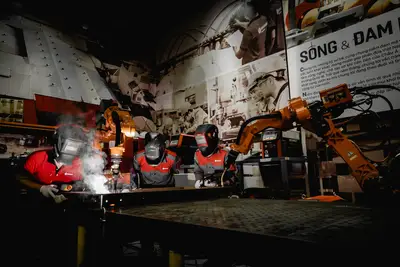
Industrial robots existed before, but most were rigidly programmed for one specific task and would stop immediately if the environment changed even slightly. Today’s humanoids use cameras and sensors to perceive their surroundings, interpret situations through AI, and adapt flexibly.
The biggest difference? They’ve evolved from "machines that repeat fixed motions" to "workers capable of making context-aware decisions."
According to the International Federation of Robotics' 2023 data, the demand for versatile robotic systems is surging. The industry expects a 20% increase in the deployment of mobile humanoids across logistics sectors through 2025.
First Stage: Factories, Next: Everyday Life
- Logistics & Manufacturing: Robots are now taking over heavy, repetitive, and dangerous tasks.
- Services: Expanding into roles like store assistance, food serving, and delivery.
- Care & Home Use: In tandem with aging populations, they’re moving toward helping with household chores and caregiving.
According to the World Economic Forum's 2024 analysis, humanoid technology is bridging the gap between industrial automation and domestic assistance. They estimate that over 1 million units could be operational in service roles by 2026.
Who’s Driving the Market?
Global tech giants and major automakers are rapidly entering the humanoid robotics space, turning what was once a niche field into an intense race for "robot mass adoption." The core competitive edge ultimately comes down to how naturally, safely, and affordably these robots can be built.
Like smartphones once did, robots may one day become indispensable—things we won’t imagine living without.
Challenges Remain Clearly
- Safety: To work alongside people, robots must have proven technologies to prevent accidents.
- Cost: For home use, prices need to drop significantly to become affordable for average households.
- Battery Life & Durability: Long-lasting, reliable performance under continuous use remains a key challenge.
RobotToday delivers the latest and most critical insights on industrial, service, and humanoid robots—and automation technologies—fast and clearly.
Quick Comparison
| Category | Item A (Past Robots) | Item B (Modern Humanoid Robots) |
|---|---|---|
| Functional Characteristics | Fixed machines performing only pre-programmed repetitive motions | AI-driven robots that perceive surroundings and make autonomous decisions based on situational awareness |
| Environmental Adaptability | Vulnerable to environmental changes; limited to previously set tasks | Equipped with cameras and sensors for real-time perception, enabling flexible adaptation to dynamic situations |
| Installation & Application | Requires dedicated infrastructure; difficult to integrate into existing environments | Human-like form allows direct use of standard spaces (stairs, door handles, etc.) without modifications |
| Primary Application Areas | Focused on specific repetitive tasks in manufacturing processes | Industrial logistics and services (e.g., food serving, delivery) → expanding into daily life applications such as home care |
| Core Technological Elements | Emphasis on hardware precision | AI (brain) + advanced hardware = capable of intelligent, autonomous operation |
FAQ
Why do humanoid robots resemble humans?
How is today’s humanoid robot different from past industrial robots?
Where are humanoid robots being used first?
What challenges must be overcome for humanoid robots to become widely adopted in homes?
휴머노이드 로봇이 과거의 로봇과 가장 다른 점은 무엇인가요?
휴머노이드 로봇이 사람과 비슷한 형태를 갖추게 된 이유는 무엇인가요?
휴머노이드 로봇의 도입이 노동 시장에 미치는 영향은 무엇인가요?
Popular posts
AI guide to diagnostics: how robots find suspicious shadows
AI in manufacturing innovation guide for production capacity
AI in Medical Robotics: How to achieve ultra-precise surgery
Comments 0