Can robots replace outsourced manufacturing? Practical limitations and advancements
What Parts of Outsourced Production Can Robots Replace?
- Structured repetitive tasks are nearly fully replaceable
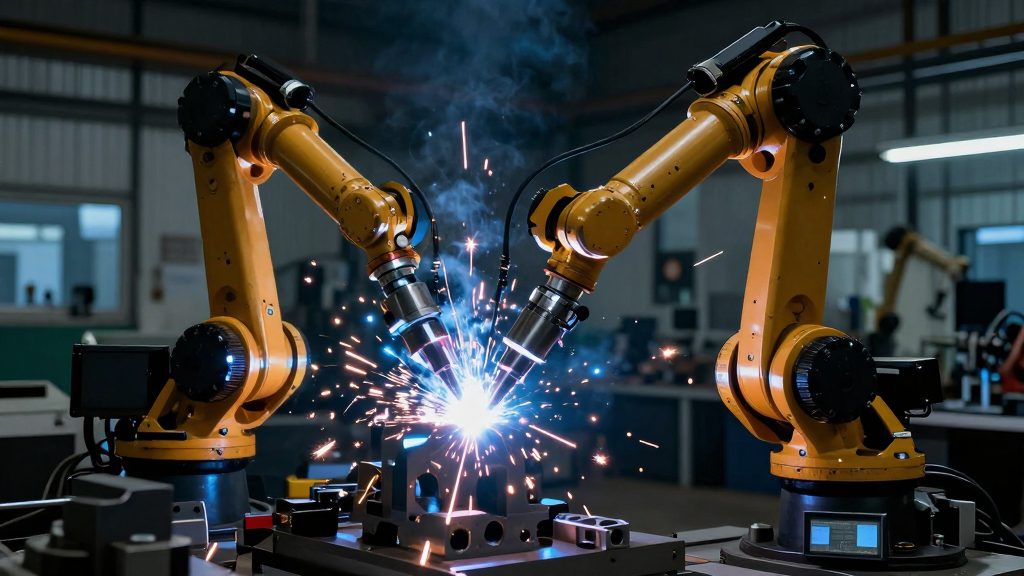
- For example, screw tightening, component alignment followed by bonding, and quality checks via inspection sensors—tasks that follow a consistent pattern—are better handled by robots than humans due to their precision and ability to maintain performance over time. Thanks to their near-zero error rate, introducing robots into outsourced production with fixed processes leads directly to improved productivity and reduced labor costs.
- General packaging and sorting tasks are robot-capable, but conditionally
- Robots can handle tasks like arranging items into boxes, yet accuracy may decline when product sizes and shapes vary significantly or when packaging materials are flexible. In such cases, autonomous adaptation using sensor-based systems (e.g., cameras + AI) is essential—meaning that a simple robot isn’t enough. Instead, an integrated hardware + software system is required.
- Unstructured, irregular tasks still rely on human expertise
- For instance, manually sorting components in low-volume, high-variety production runs or adjusting slightly deformed materials still depends heavily on human intuition and adaptability. To enable robots to manage such "unpredictable variables," they would require advanced machine learning and massive training datasets—making real-world deployment currently limited.
- Quality inspection in outsourced manufacturing can be partially automated
- In most outsourcing scenarios, quality checks are still performed manually or via visual inspection. However, integrating smart cameras and AI-powered vision systems allows automatic detection of surface defects, dimensional deviations, or missing parts. That said, identifying the root cause—answering “why”—still requires human judgment. Interpreting automated inspection results and deciding on process corrections remain tasks beyond current robotic capabilities.
- Planning and operation management of outsourced processes must be led by humans
- Robots can only receive commands on *what* to do, not understand *why* a task must be performed or when and which resources are needed. Outsourced processes involve many variables—such as delivery date changes, material delays, and quality issues—and making comprehensive judgments to adjust workflows requires human planning skills and decision-making ability. Robots are merely executors in this process.
Five Essential Criteria to Evaluate Before Introducing Robots into Outsourced Production
- Assessment of process repeatability and consistency
- If outsourced tasks constantly change—varying in component combinations, assembly sequences, or specifications—the efficiency gains from robot adoption will be low. Conversely, when producing 100+ identical units using the same method repeatedly, robot integration can yield rapid return on investment.
- ROI (Return on Investment) calculation relative to equipment investment
- Even with high-cost robotic systems, a large and stable volume of outsourced orders can offset initial costs over time. However, for small-scale or highly variable outsourced production, human labor may remain more economical than robot deployment.
- Compatibility with on-site infrastructure
- Robots must interface seamlessly with existing facilities—such as electrical and compressed air supply, communication networks, and workspace layout. For example, even a compact robot may be impractical in small factories lacking dedicated cabling or charging stations. Therefore, assessing the scalability and flexibility of existing on-site equipment is essential before adoption.
- Technical proficiency and training potential of operating personnel
- Simply having operators press buttons is insufficient. When unexpected errors occur, staff must be able to diagnose issues, reconfigure settings, and perform basic maintenance. Thus, on-site teams must include personnel capable of operating machinery and performing fundamental maintenance tasks.
- Ability to adapt to process changes
- Outsourced production often requires rapid adjustments based on customer demands. The robot system’s capacity to quickly reprogram or update software becomes critical. Robots equipped with autonomous adaptation features—such as AI-driven template learning—are particularly effective in handling frequent process changes.
Frequently Asked Questions
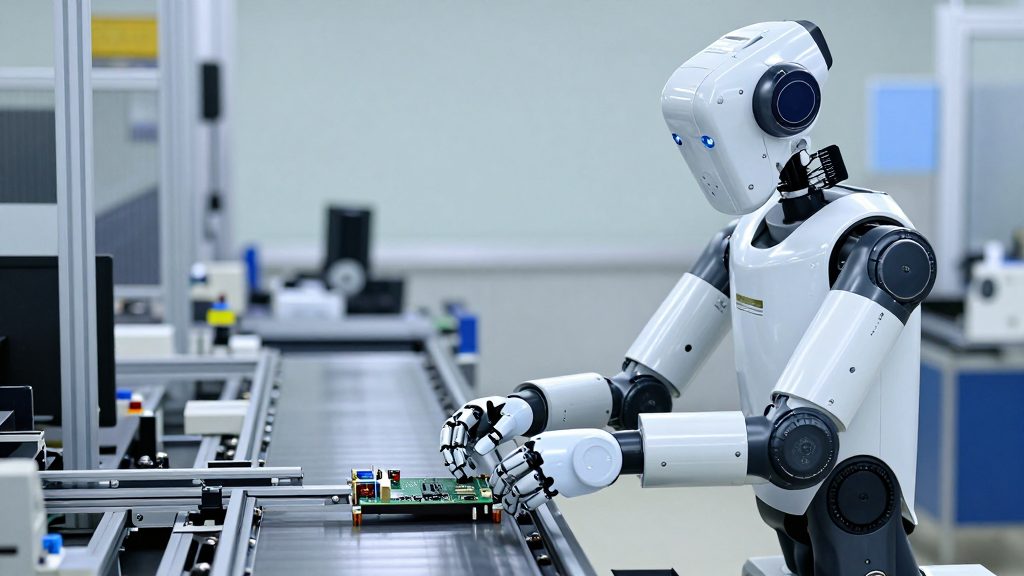
Q. Can robots replace 30% of outsourced production? A. It’s technically possible, but the figure “30%” varies significantly by context. If 30% of tasks are automatable, the investment may be justified—yet if that 30% includes low-repetition or judgment-dependent activities, actual automation rates may only reach 10–15%. The key isn’t *what* to automate, but analyzing why a task repeats and what risks it reduces.
Q. Is robot adoption unrealistic for small outsourced manufacturers? A. Full automation may be challenging, but minimalist robot systems (e.g., 2–3-axis lightweight robotic arms) can be installed even in limited spaces. They are particularly suitable for repetitive tasks like packaging, sorting, and inspection in small-batch, high-variety production. The core principle is identifying the single biggest source of time waste on site—focusing robot deployment there enables meaningful results even at a small scale.
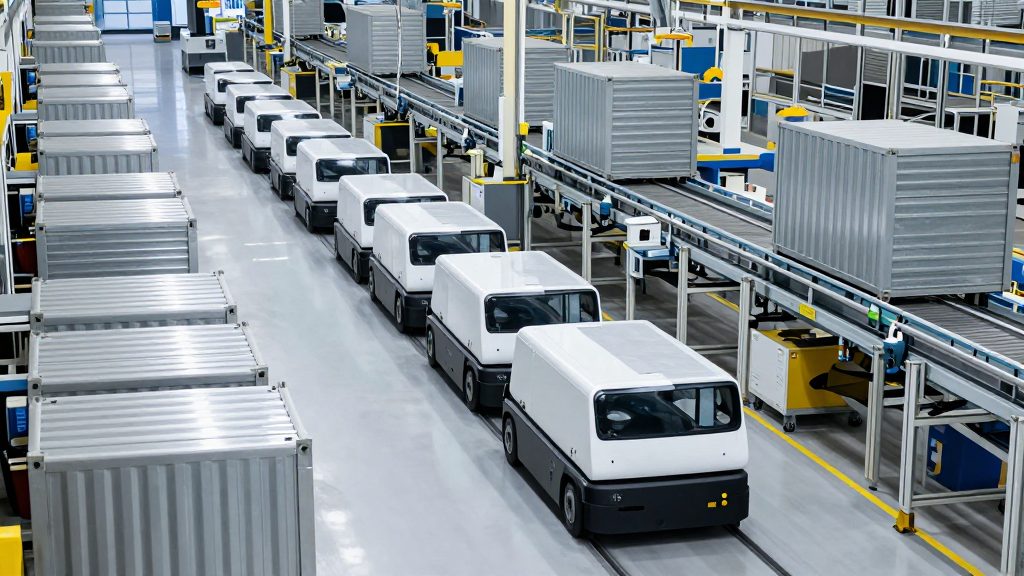
Q. Will labor costs be halved after introducing robots? A. Simply reducing labor costs is difficult. Robot operations require new roles such as installation and maintenance staff, programmers, and system administrators, which shift labor expenses rather than eliminate them. In reality, *labor cost structure changes, burden decreases, but overall labor cost reduction typically ranges from 30% to 40%*. The key lies in *improving the quality of labor*, enabling humans to focus on higher-value tasks—such as process optimization and customer need analysis.
---
It's premature to conclude that robots can fully replace outsourced production. However, most failures in introducing robots into low-repetition tasks stem from *insufficient process analysis and unrealistic expectations*. The real challenge isn't knowing "what robots can do," but rather clearly answering, "Why should this task be performed by a robot?" In outsourced production environments, the true value of robots is realized not as complete replacements, but as assistants—reducing the amount of work humans must do while improving accuracy and consistency.
Comments 0